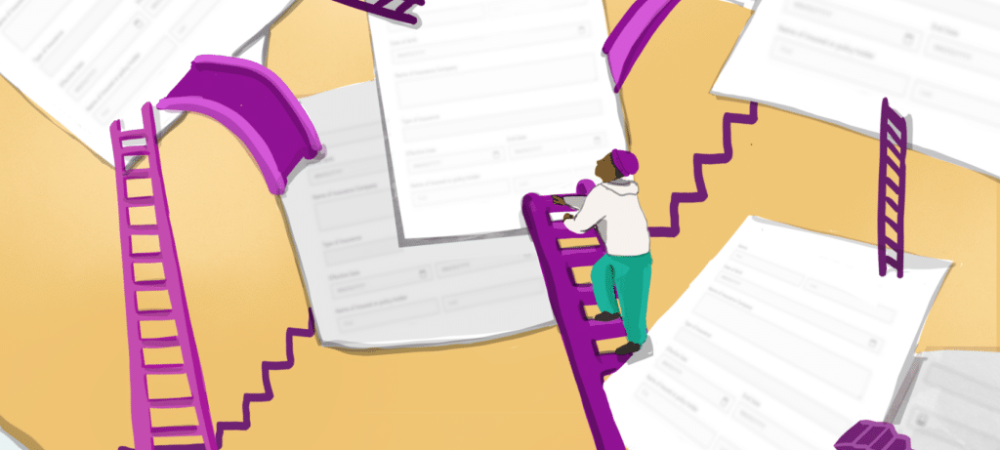

With Open Enrollment in full swing right now for millions of Americans to choose their health insurance for next year, Health Hub: WAMU’s Weekly Health Series decided to drill down on the issue of young people who are perhaps choosing their own health insurance for the first time.
They reached out to Whitman-Walker Health’s Andres Cruz, Senior PBIN-Bilingual Public Benefits and Insurance Navigator, to speak in this radio interview about how to navigate the system, not procrastinate, get educated, and choose your plan now.
(Reminder: If you need PBIN assistance, you can call our main number 202.745.7000 to get an appointment with a PBIN Navigator.)
Excerpts:
Average prices for individual plans are going up more than 14% in Maryland, nearly 10% in D.C., and more than 16% in Virginia. That comes on top of last year’s big hike. The enhanced federal subsidies for Affordable Care Act plans also expired at the end of 2025 after Congress did not extend them.
KFF Health News’ Blake Farmer co-hosts the consumer health series Health Q. He told WAMU’s Morning Edition host Esther Ciammachilli that the best place for young people to start is with an expert, known as an independent assister.
Assisters are not brokers. Farmer explains they do not sell plans, and they are not allowed to take money from insurance companies. The service is free and often funded by the federal government.
Andres Cruz has been an independent assister with Whitman-Walker Health for more than a decade. He says the job can feel a lot like being a therapist.
“That’s like hitting a nail on the head. Folks just don’t know. Some folks are just, like, overwhelmed, ‘I just don’t know what to do.’”
Assisters ask about health needs such as prescriptions, specialists, and planned procedures. Applicants need proof of residence and must project their income for the next year, which can be tough for young people with unsteady pay.
That information will help determine whether someone qualifies for Medicaid, the government-run program for lower-income people. Even people who do not qualify for Medicaid may be eligible for a subsidy. The enhanced credits are gone, but Farmer says people who make less than $64,000 as an individual can still get some help.
Listen to the full interview on WAMU at: